Schleswig
Wann wird es endlich wieder so, wie es nie warSchleswig is both the setting of the narrator’s family life and a place where the boundary between home and psychiatric institution is unusually porous. The family’s house stands within the institution’s grounds; its rooms hold childhood memories, the father’s final illness, and, years later, an unsettling encounter with the changed site. As the town shifts from the setting of family routines to a place revisited after long absence, the landscape registers the losses and transformations that memory alone cannot settle.
Family Life Beside the Institution
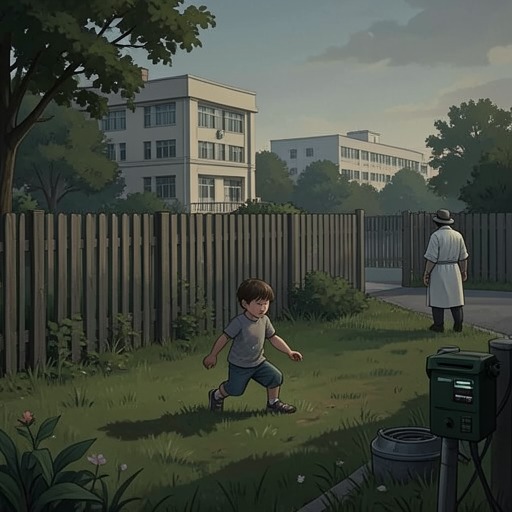
The narrator grows up in Schleswig in a house situated amid the psychiatric institution. The grounds are not distant scenery: they form the immediate world around the family home. On an early return after a year away, the narrator walks familiar paths past buildings and fenced gardens where patients still lie about. The recognition is mixed with a growing sense that something has changed, although the absence is not yet clear. The institution and the household are distinct, but their closeness makes the patients’ presence part of the narrator’s ordinary experience of place.
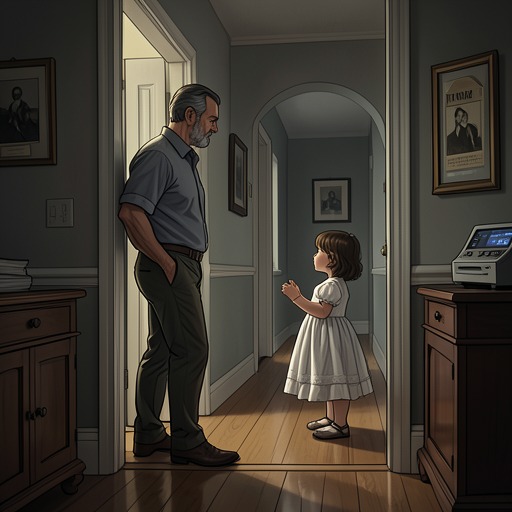
After the narrator’s second-oldest brother dies in a car crash, the parents resume work and maintain familiar routines—shared meals, evenings in front of the television, and walks. Yet those activities feel like an imitation of the life they once had. With the eldest brother studying in Munich, the narrator is the only child still living with the parents in their Schleswig house, in the middle of the psychiatric grounds. The home therefore becomes a setting for bereavement as well as childhood: its familiar daily life continues, but the family’s former shape does not return.
Sailing and the Town’s Waterside Life
Schleswig is also where the father’s long-imagined sailing life takes material form. Though he has never sailed and has only once taken an excursion steamer with the narrator, he joins the Schleswiger Schlei-Segel-Club and rents a coveted berth before owning a boat or even going out on the water. He buys a white sailing outfit and spends weekends in his chair practicing knots with a piece of rope. At the harbor, he proudly shows the family his club membership card and the empty space between the other boats that he has rented for his future vessel.
The family’s practical experience does not immediately match the scale of his enthusiasm. The father and mother take a sailing course and sign up for the sailing examination. He misses lessons while concentrating on buying a boat, selecting a small cabin boat called Sepia partly because it is advertised as uncapsizable and unsinkable. It arrives from Cologne on a trailer before either parent has earned a sailing certificate. The boat is hoisted into the water and christened JoMaHe, a name formed from the first two letters of the names Joachim, Martin, and Hermann. Even the launch bears a mark of the family’s ungainly beginnings: a small bottle thrown against the plastic hull leaves its first dent.
The examination brings the ambitions into contact with difficult conditions. The father passes the theoretical part with no errors, and the mother passes as well, but the practical test takes place in a strong wind, with the candidates in oilskins, life jackets, and bright red caps. Schleswig’s waterside setting thus frames both the father’s grand preparations and the less controllable realities of learning to sail.
Snow, Departure, and Return
During the great winter snow disaster, Schleswig is temporarily buried in snow and later reappears between high walls of cleared snow. The narrator imagines that the snow will have enclosed the town in a cool cocoon and that a transformed place will emerge when it melts. Instead, the town proves to be the same wet, muddy little place as before. For a few days, cold sunshine gives it the look of a ski resort without mountains. This contrast between anticipated transformation and ordinary return anticipates the later, more lasting changes to the psychiatric grounds.
The narrator eventually leaves Schleswig for a year in the United States, hoping to go far away. Instead of a large city or California, the destination is Laramie, Wyoming, where wolves howl at night. Their cries recall the howling and screaming of patients in Schleswig. The connection carries the sound of the childhood landscape into a distant one: departure changes the setting, but does not erase the narrator’s association between nighttime cries and home.
The House as a Place of Separation and Care
Years later, after the father becomes ill, the parents’ marriage breaks apart. The father moves to Lübeck to live with another woman and her children; the mother leaves for Italy, where she finds work at a hospital on Lake Maggiore. The family house in Schleswig stands empty, and there are plans to convert it into a supported-living ward. The proposed change gives a new institutional purpose to a building that had been the narrator’s home within the institution’s grounds.
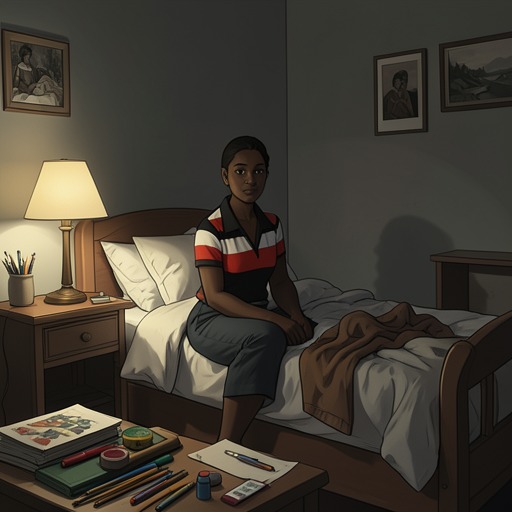
The father’s illness worsens, and after further operations and treatment he leaves the new household and returns to the Schleswig house, sick and alone. By the time the narrator visits after two months away, the father’s body has changed markedly: his former fullness no longer appears robust, but weakened by illness and loneliness. The house becomes the setting for the practical work of care as the parents draw close again. The father’s pain seems to spread beyond his body, through the room and into the house, reaching the narrator in the former childhood bedroom. Late morphine treatment requires enormous doses, which the father injects into his swollen abdomen. In the final weeks, the parents endure the daily labor of his dying together, far from the father’s former theories and professional authority.
The change in the father’s condition is stark. When paralysis below the chest abruptly ends his pain, he wakes after hours of struggle with an unexpected cheerfulness—the first time in nearly two years that he has been free of pain. The narrator later visits two parents who appear to be lovers, attending to one another with an intimacy that once seemed unimaginable. Schleswig’s house has thus become more than the site of the family’s earlier separation: it is also where the parents spend their last shared weeks. The father later dies in hospital, but the house holds the experience of his illness and the renewed closeness that preceded his death.
The Institution’s Altered Landscape
On a later visit, the narrator finds the psychiatric grounds substantially changed. The approximately three-kilometer boundary wall and both gates have disappeared, so that someone unfamiliar with the area might scarcely notice where the town ends and the institution begins. Houses C, D, and M have been demolished; House K stands empty, its windows smashed up to the top floor. Later buildings remain in use, but tall, opaque palisades have replaced the fences, blocking the view into the grounds. The benches by the main entrances are deserted, and the whole site seems empty, perhaps even closed.
The neglect is visible in the details: workshops are boarded up, the football pitch is freshly mown and marked with precise lines, and the newer clinic’s facade is disfigured by rust. Behind its replaced, thick-looking windows, a few patients move back and forth, blurred from outside. The narrator longs for the former patients’ unmistakable presence and for their many nighttime cries, sounds once bound to the familiar grounds and even associated with restful sleep. The institution has not simply vanished; its remaining people are now harder to see and hear.
The family house has itself become a supported-living ward, identified by a sign as House S. The narrator recognizes on its door the grooves left by the family dog’s years of scratching to be let inside. Walking around the fence, the narrator reaches the adjoining children’s-room windows and the old terrace door. A pale patch of breath pulses on the glass, swelling and shrinking around the indistinct outline of a face. Someone is sitting on the floor in the former bedroom, breathing against the pane. The visit ends not with a recovered childhood home but with the old rooms occupied by an unknown presence—a final image in which private memory, institutional reuse, and the present-day landscape remain inseparable.